On the Way Up
A podcast by YouTuber Joe Lee Flynt that follows his life and his journey to become verified YouTuber/influencer. Each week will have a new guest with a new topic of discussion!
Categories: Comedy







A podcast by YouTuber Joe Lee Flynt that follows his life and his journey to become verified YouTuber/influencer. Each week will have a new guest with a new topic of discussion!
Categories: Comedy
Confessions Of A YouTuber is a Podcast that explores the untold truth about what it takes to be a successful YouTuber, whatever the topic. Each week I discuss YouTube Creator issues and interview a Guest YouTube Creator. I get up close and personal and talk about their YouTube experience, motivation and the challenges they’ve faced on their journey. My guests reveal their secret tips and strategies that has helped grow their YouTube channels & online business. As a YouTuber myself for 10 years, and certified in YouTube Audience Growth, I know the trials & tribulations of being a successful YouTuber, balancing life and sustaining YouTube channel success.
Categories: Business
Tags: howtomakeyoutubevideos, videomarketing, youtube, youtubebusiness, youtubecreators, youtubegrowth, youtubehelp, YouTubePodcast, youtuberinterviews, YouTubers, youtubesuccessschool
Bob Baker shares morning affirmations and guided meditations (from his popular YouTube channel) on abundance, success, confidence, gratitude, relationships, health, and more. Perfect for when you need a boost of positivity and encouragement.
Categories: Education, Health & Fitness, Religion & Spirituality
Tags: Affirmations, bob baker, guided meditation, Law of Attraction, meditation, mindfulness, positive thinking, positivity, visualization, youtube
Red and Blue of Overly Sarcastic Productions keep the learnin’ rollin’ with a biweekly after show! Join the OSP crew as we chat about all the anecdotes, corrections, and fan questions that didn’t make the regular content (and probably get swept way off topic along the way!) So yeah…let’s do some (more) history?
Categories: Education, TV & Film
Tags: Blue, History, indigo, Literature, mythology, OSP, overly sarcastic, red, youtube
What’s it like pitching a TV show? When should your failures start turning into successes? How do you take advantage of opportunities? Join hosts Andrew Mayne, Justin Robert Young, and Brian Brushwood as they talk about their experiences navigating creative arts and the media landscape.
Categories: Arts
Tags: After, Branding, creativity, Entertainment, hollywood, industry, media, new, succeeding, success, things, tv, weird, youtube
Michelle Khare has trained with Olympians, piloted a fighter jet, and even joined a clowning troupe. In this weekly podcast, Michelle and her fiancé Garrett share their experiences as digital creators and partners who have made a living taking on the world’s most extreme professions, lifestyles, and communities.
Categories: Comedy, Education, Society & Culture
Tags: behind-the-scenes, challenge accepted, garrett kennell, hbo, karma, michelle kare, michelle khare, mission accomplished, mk, self help, youtube, YouTuber
“All films have an audience, some are harder to find”. Join Oscar and Carl as they humorously deconstruct some of the biggest Hollywood bombs, misguided sequels and awful tv movies as they attempt to answer the question ‘Who Would Watch This?’
Tags: australian, bad, Comedy, film, Funny, movie, review, watch, who, worst, would, youtube
Do you make your living as a creative? This show is for you. Nick Palkowski talks with other creative professionals about what it takes to make a living with your art. From staying motivated to best editing practices to booking clients, we will look at all sides of life, business, and art. Nick is a videographer, YouTuber, and runs event live streams. A few of his clients include Porsche, Mercedes-Benz, Audi, Purina, and Lands’ End. Guests focus on videography, photography, and filmmaking. Learn how to grow and improve as a content creator.
Tags: contentcreator, creative, editor, photographer, videographer, vlogger, youtube
Controlled Chaos is a show for creators. The host, Gajan, sits down with creative minds in varying disciplines to discuss their journey, process, and adversities. The goal of the show is to have honest and meaningful conversations around creating content, our responsibility as creators, and empowering others to create as well. What’s unique about Controlled Chaos is that we unapologetically venture down rabbit holes and embrace the spontaneity of discourse. This show aims to build an experience that’s authentic for the listeners, so that they truly find value in the topics being covered. We hope that you enjoy all this content as much as we enjoyed creating it.
Categories: Arts, Business, Society & Culture
Tags: chaos, control, controlled, creative, creativity, Culture, inspiration, interview, joe, marketing, media, rogan, social, Society, youtube
Stories & strategies from the world’s greatest audience builders. This show is for online creators. Period. Whether you are a founder, a tinkerer, or an observer looking to start creating: **there’s a place for you here**. You’ll be served the best knowledge from the world’s leading audience builders so you can start growing your project or brand.
Blake: Robbie Crabtree is here and I’ve seen you all over the place for a really long time on Twitter, and I’m glad we’re actually connecting cause. I don’t get to talk to everybody on Twitter.
[00:00:11] So sometimes you forget they’re human beings. So it’s good to see that you’re here and it’s good to meet you, but I want to lay some ground rules for this podcast. First and foremost. First off the episodes have to be actionable or it doesn’t air. So we’re going to hold ourselves to that standard as much as we possibly can.
[00:00:27]Second rule of the podcast. It depends is not an allowed answer. You’re not allowed to ever say it depends for anything. You have to take a stance. And then finally, last one this is more for me overall, but if the show’s not valuable, the whole thing gets canceled. So that’s the moment. I know we, we stopped this thing.
[00:00:44] So just so you’re aware of what the standards are for the show. It’s a brand new one called how I built my audience. And you are a fantastic guest to have on for this because you built pretty quickly on Twitter. Then you built your your, was it, is it cohort-based the public speaking course or, okay.
[00:01:03] Yeah. So you built that and now you built in public to the point where you actually got an offer to acquire that cohort and you work with on-deck now. So you have built an audience through all that. And I’m curious to hear from your own words, what your journey has been so far, first off, when did you actually take Twitter?
[00:01:22] Seriously? When did you start.
[00:01:25] Robbie: So that was June. And if we want to just boil it down really quickly like that and give somebody an actual thing that they can learn to build an audience on Twitter, go watch the webinar that Matthew Kobach and David Pearl did, because that was the moment that I said, Oh, here’s the playbook.
[00:01:44] And me being a trial lawyer, me being a speaker, I love getting playbooks and just saying, okay, now implement it and follow it. And good things happen. I don’t have to reinvent the wheel. So that’s exactly what I did. And I started that in June and I’ve now grown Twitter. I dunno something like 8,000 followers.
[00:02:01] What
[00:02:02] Blake: were you at before? Zero? Like a hundred and that newer.
[00:02:06] Robbie: Oh, like 180. I’ve been on Twitter since 2011 and just not taking it seriously. And in fact, the couple of months, right before June, I was losing followers and I was maybe between like once or twice. In the month. And so it was like a huge
[00:02:19] Blake: turnaround.
[00:02:20] Okay. So let’s talk a little bit about step-by-step in this journey. So was that the David Parell, Matt Kobach, Utah YouTube video, is that like basically the first thing that really got you pumped to do this,
[00:02:31] Robbie: that, and combined with seeing what Jack Blitzer was doing, where it was really building in public.
[00:02:37] Cool.
[00:02:38] Blake: Okay. So you see those two, then you’re still at one 80 and losing followers. What was micro step one? What was after viewing that content knowing the playbook. What did you actually do yourself that started working?
[00:02:52] Robbie: So there’s two big steps. One is identifying what your three main topics are going to be to talk about.
[00:02:57] And the second one is just our tweeting and staying really consistent. Those two things. That’s what started it all.
[00:03:04] Blake: So for you, what w what were those top three
[00:03:06] Robbie: topics? So I was talking about being a trial lawyer, public speaking, and pop culture. Do you
[00:03:11] Blake: still hold to those three to this day or has it changed?
[00:03:16] Robbie: So I still do a lot of those. I’ve been able to broaden out a little bit and do more strategy, talk to a little bit more about how to build Twitter, how to build a course. As it’s grown and people have seen this building in public working, I get to talk more about that sort of creator side. On a whole, instead of just these very narrow news topics.
[00:03:33] But when you start in order to capture an audience, they need to know very clearly what they’re going to get every single time they come to your tweets because they don’t know you, they don’t trust you. They don’t have any background. Now, after doing this for seven months, people know what I’m about.
[00:03:48] They’ve seen my writing, read my tweets. They know who I am.
[00:03:53]Blake: How was being a trial lawyer? How has that actually helped you in being a content creator? Because you don’t see tons of lawyers out there. At least I don’t creating content effectively. They’re out there. I’m sure you’re one of them, but how has that actually helped you transition into being effective on Twitter, effective on building an online course effective at basically?
[00:04:15] Robbie: So my role as a trial lawyer, Was talking to strangers every day, whether it was in jury selection with 80 a hundred people, whether it was, and an opening statement in front of 12 jurors or a closing argument in front of 12 jurors are talking to witnesses. I’ve never met my whole life was based around creating stories, creating communication, and connecting with people that I don’t really know.
[00:04:34] And what better, medium than Twitter, because there’s. Hundreds of thousands, millions of people out there. I don’t know them. So I’ve got to figure out what messaging is going to work is going to connect with them and is going to give them a little bit about me, but also help them.
[00:04:49] Blake: So I that’s awesome. And I think that there’s a nugget in there.
[00:04:53] So not everyone listening here is going to be a professional, like a lawyer or a doctor have some kind of, you’ve gone through a lot of education to get to that point. Are you still a trial lawyer or have you completely gone all in on this too?
[00:05:05] Robbie: So I still carry a light practice as a trial all are and just take cases that are really impactful and important for me to work on.
[00:05:12] So it allows me to be very particular in the cases I take, but I think it’s important to keep that skill and keep it really tight because that’s one of those differentiators that I have that most people can’t won’t ever be able to say that
[00:05:24] Blake: they have. Yeah, for sure. And being a creator is one thing and doing all these side hustles.
[00:05:28] It’s cool. It’s really fun. But there are, most of us, I would say probably have a main hustle still or have come from a background that was totally different than the creator economy stuff, the marketing and all that. But I think there’s really a nugget in there that you can keep that with you and actually use it to your advantage now.
[00:05:46] Whoever’s listening may not have been a trial lawyer and transitioned that into your experience. So like stealing exactly from you may not work, but the general principles of maybe somebody was a doctor and they decided to just give it up and become a creator, or maybe they were a sales person, whatever role it is.
[00:06:01] Look for the areas where you’re strong and basically translate that into a foundation, which is basically what you did. And I’m curious Once we talked about your micro step there, where you started just posting and you identified those main three topics. When did you, or are you at a point where you feel like everything just works and it’s hard to get validation on what formats and tweak copy actually does?
[00:06:28]Because pretty much everything works for you at this point.
[00:06:32] Robbie: So there’s two different things. There’s a tweak that looked like they do well on Twitter. And there’s the tweets that do well, but nobody realizes it. And what I mean by that is you get some that get great engagement, right? And they get tons of likes, comments, retweets, all that good stuff, and don’t get me wrong.
[00:06:47] Those are great. And I generally know how to put those out if I want to, I don’t put a ton of those out because I don’t find them as interesting, but I do put some of them out. So just because you need to do that. But then the second category is more interesting because those are the ones that you don’t realize are making an impact on people until two, three, four, five months down the line.
[00:07:07] When they reach out to you and say, have been following your work, it’s really helped me. I had this speech and I gave it and I used your tips or, Hey, I’m really interested in taking your course and I’ve never, they’ve never liked a single thing. I’ve tweeted. They’ve never commented on a single thing I’ve said, but they say when they want to take my course.
[00:07:23] It’s because I’ve been following you and I’ve just been reading and seeing all the stuff you’re putting out there. So at this point, I have a good idea of what works for both of those two approaches. And sometimes you’ll see tweets of mine that, get pretty low engagement, but I know they’re working because I’ve had enough validation.
[00:07:39] I have people coming into DMS or talking to me offline to say, Hey, this is what kind of hooked me.
[00:07:45] Blake: Yeah, no, I’ve seen the same thing and I’m still at a stage myself where. I’m probably I’m trying to drive engagement a lot more getting into the really deep, interesting stuff still. Cause I’m trying to build that framework, but yeah, I totally get what you’re saying.
[00:07:58] And I’m curious, like what point you were at when, in terms of Twitter followers, when you actually started your course when you launched
[00:08:05] Robbie: it? I started my lunch, my course at 500 followers. That’s I did not rely on a large Twitter following prior to that was, I created a very like that idea of like your, your true fans, those thousand true fans.
[00:08:19] And I didn’t have a thousand true fans, but I had 50 and I had, they were really excited about what I was doing. So I just moved. And that’s why I did my course, because I essentially had a captain like an email list. I was 47, highly motivated people to purchase. And I went ahead and pushed forward at that point.
[00:08:36] Blake: Isn’t it crazy. Like people will complain. I don’t have 10,000 followers, so how am I going to get anything out there? But when was the last time that you talked to like even 50 people in a room in your life? Most people don’t get to do that and be the leader talking out to being on Twitter and having people actually care about what you’re saying.
[00:08:53] Even if it’s only 10 people. When was the last time that you were in a room and 10 people legitimately cared about what you were talking about? It’s really rare when you put it in that context. I think it helps you be okay with. Minimal engagement, as long as it’s really making some kind of impact, like you’re mentioning.
[00:09:09] So you start the course when you’re at 500, did it immediately work because you had those fans or was there a certain point where it really ramped up?
[00:09:21]Robbie: I got those initial people in the door pretty quickly from that really, hot list that I would call it. And that gave me the ability to say let’s push forward.
[00:09:30] And then over that next about month as I was building everything out and continuing to build that’s when my Twitter started taking off. And then I did start getting more people in. And then as I am at this point, now I get a fair number of people just reaching out who I’ve never interacted with saying, Hey, I’m really interested in your course.
[00:09:47] I read what you’re putting out there. I’d love to sign up. And so it’s been a really interesting change seeing as this growth happens and the people just cold outreaching me instead of me having to like, try to go find them. Yeah.
[00:09:59]Blake: That’s really the, like the best part to me is when you can finally get to that place where people care.
[00:10:05] Enough about you, that they’ll actually seek you out. And that can happen earlier than people think. I it’s surprising, like you could have a thousand followers, but if you’re actually a pretty valuable creator in terms of offering information, you’ll get people seeking you out. And then there’s essentially nothing that can actually stop you at that point is what I found.
[00:10:23] So I’m still pretty small, but I don’t think that I could stop the Twitter growth if I tried at this point. But what people don’t see is like, The years of learning skills and crafting my own skillset to get to that point and actually tweeting. So like I started really taking Twitter seriously in maybe September or August and it totally tanked for at least the first month, but then something just clicked and then I couldn’t be stopped at that point just because I kept putting stuff out.
[00:10:54] Do you think it’s more important to. Seek prolific quantity of content or prolific quality of content.
[00:11:03] Robbie: So prolific quality is much harder to achieve. So I would say at the beginning, just go for quantity and on your own page, when you’re commenting on other people’s stuff, that’s when you try to make sure you’re really delivering quality and you’re being more targeted in that because you don’t want someone reading what you’re putting in saying this person’s a clown.
[00:11:22] I’m not going to pay attention to them. But like people are going to mess up. You’re going to have some bad tweets. Like you’re going to have bad articles. You put out, you’re going to create some bad stuff. That’s part of the game. That’s fine. But I think you just need to keep putting stuff out there because all it takes is one that perfect tweet, that perfect article to catch someone’s attention.
[00:11:40] Say this person’s interesting. Like I want to talk more and that’s one of the keys to growth on Twitter, is getting the attention of some bigger accounts. And having them help you, whether it’s through likes through comments or even just actually shouting you out, it makes your growth a lot faster.
[00:11:54] Like my quick growth came because someone put me on a James clear list when he asked for Twitter accounts to follow under 10,000. And that was by far the biggest moment, but it was completely unknown to me. It was multiple people and it was all because my messaging had been resonating and they said, Hey, if you want these topics again, this goes back to that micro step.
[00:12:12] If you want to learn about these topics from somebody who really knows this stuff, because I had the background that I did go follow him and that just shot it through the air. And that was really where I went off to the
[00:12:22] Blake: races who were some of the other people that helped you out to grow? Like some of those bigger accounts?
[00:12:28]Robbie: Some of the early ones were like, Oliver canteen was great. Jack Fletcher was great. Even David Pearl was great to me. So I’ve taken a lot of their courses and gotten to know them. And again, this comes back to providing value to them, getting to know them. Like it’s not about this manipulation trying to use these accounts.
[00:12:43] What you’re trying to do is create real human connection and like I’m good friends now with Jack is going to be like a founding fellow in my, on deck. Performance speaking course, like when I announced the news on Twitter, like immediately David reached out to me via text and we were talking about things like these people.
[00:13:00]If I want to talk to Oliver canteen, I pick up the phone and call him and we just chat about things. It’s about building real connections, like real friendships. And that’s the beauty. I think that’s a mistake too many people make is how can I game the system instead of realizing just be a human, make that connection, build friendships.
[00:13:18] And good stuff’s going to happen. Like you get value out, value will be returned to
[00:13:21] Blake: you. How do you personally nurture your the relationships in Twitter specifically? Like D do you use DMS a certain way? Do you have a system? Is it more through comments? What’s your strategy for nurturing your audience?
[00:13:35]Robbie: When I was smaller, it was much harder. Like I had to reach out to people and try to get in their comments, but now it’s pretty much, I go to DMS pretty quickly for anyone that I really want to talk to. Because at this point, like my account’s large enough that most people will take that DM. And additionally, when people reach out to me, like the biggest suggestion I’ll give is like my DMS get pretty flooded these days.
[00:13:55] And the biggest thing is don’t drop a hi. How are you type VM when you DM have a purpose behind it? Like I’m reading, 20, 30, 40, 50 DMS in a day. Maybe more tell me why I wanted to get into this conversation. Like again, that idea of provide value. Show me that it’s worth the time not to try to like big dog somebody, but just simply like time management is so important at this point of where I’m at.
[00:14:21] And I love DMS. I love getting on calls with people. I mean like me and you, we were pretty quick to just like jump on this and be like, Hey, let’s do it. I’ve seen enough of your work. You reached out and we’re down to do this. That’s how I like to nurture these relationships.
[00:14:34] Blake: Yeah, some notes for me on DMS real quick.
[00:14:36] I found for myself, I don’t know if you’re at the same. If I don’t respond to it quickly, I will never get back to it. I have to respond pretty quickly or I’ll totally forget also for reaching out to big accounts through DMS. I have to, I try to force myself to have a headline that basically I put like through a headline analyzer, like the CoSchedule one.
[00:14:55] I don’t know if you’ve ever used that, but I will actually. Put it through a headline analyzer and see how is my first line in the big one and then have get straight to the point after that for smaller accounts though. I really, if somebody smaller than me and I want to reach out to them, I love leading with a very mysterious question.
[00:15:12] So like my, one of my favorites is, Hey, I have a question for you. And then I won’t say anything and I’ll just wait for them. And that’s really fun because I actually get a lot of response on that when I do, but not with big accounts. I wouldn’t do that with them. What about, we’re talking about nurturing.
[00:15:26]Your cohort, your online courses. What’s the difference when you have somebody in that ecosystem versus your Twitter ecosystem, how do you treat those people differently?
[00:15:35]Robbie: Those people in the actual cohort, like you’re getting you’re in front of them all the time on zoom calls, you’re emailing them more regularly.
[00:15:41] It takes a much more hands-on approach, right? Because those people at the end of the day are paying quite a bit of money to get into your course. But the other thing too, for me, like those are the people who are really investing in themselves. And that sends a message to me. Like I really want to invest in them.
[00:15:57] So that means like just internally, I immediately go into this like teacher mode because I teach at SMU. Like I understand that role too. So I’m like, I want to help these people. How can I make sure they get the transformation they came here for? And so it almost is like this internal switch that gets flipped where it’s not like I’m trying to choose differently.
[00:16:16] I’m just like, this person is clearly engaged. Wants to be better. I want to make sure that happens.
[00:16:23] Blake: My I’ve got two final questions here for you that are more like against the grain stuff. So first off, why should someone not consider building an audience?
[00:16:35] Robbie: So there’s a downside, right? Is you’re going to get judged on a lot of stuff. And you may not like some of the comments you get. People are going to push back on some of your ideas. People are going to call you names. People are going to. Say things that can upset you. And there is a value in anonymity where if you can find a way to be successful.
[00:16:55] And I think Neval talks about this, like the goal isn’t to be like rich and popular is to be like rich and unknown. And there is, there certainly isn’t a value in that like having to build in public is saying I’m going to make my personal brand big, which also brings attention to me though. And that can be both good attention and bad attention.
[00:17:10] So I would say that’s the biggest downside for me. I’ve always been very open from the various early time as a trial lawyer. I was always sharing everything I had with the other side. I just always been this way where I said, I don’t care. You can have it because nobody can do it. Like I can.
[00:17:26] Blake: And in my final one here, do you believe that.
[00:17:32] Do you believe that you should try to sway haters to your way of thinking? Or maybe, maybe not convince them, try to brainwash them, but do you think it’s worthwhile having conversations with people that are asking for refunds because they think your course isn’t good enough. Do you think it’s worthwhile responding to haters in the comments?
[00:17:50]Is there value in that? Where do you think cutting ties is the best way to go?
[00:17:56] Robbie: I don’t think it’s worth the time. If someone asks me for a refund on something, I’ll give it to them happily. And. There’s this, I’ve got better things to worry about. I’d rather focus on the people who are getting value, who are engaged and who are benefiting from what I’m having to offer and focus on them because that negativity can really draw you down and it can eat up your time and your energy and your effort and remove it from these people who can actually benefit.
[00:18:18] So my approach is let’s focus on the reward. Let’s focus on the upside and let’s just get rid of and say, here’s your money back. Fine. We’ll part ways. Best of luck.
[00:18:28] Blake: Well, Robbie, I really appreciate you coming on. I’m guessing your next big goal on Twitter is to hit that 10 K Mark. So how many days you’ve given yourself to get there?
[00:18:36] Hi,
[00:18:37]Robbie: It’ll happen when it happens. Like I’m not gaming the system that hard these days. I just keep talking about what I’m talking about. At some point it’ll hit, I would guess probably what are we, I guess probably sometime in March it probably would hit 10 K maybe April. I don’t do any of those tactics where I get a bunch of shout outs and things like that to inflate my numbers.
[00:18:56] So it takes a little bit more time, but I’m good. That’s
[00:18:58] Blake: the best way to go. You’re doing it right. Again, everyone should be following Robbie. I’m gonna give you a chance to just promote yourself cause you’ll do it better than me. What’s your Twitter handle? Where’s your website? Where can people find you and what are you up to?
[00:19:11] Robbie: Sure. So easy way. Twitter is at Robbie crab. You can find my website at it’s Robbie crabtree.com. I’m currently writing an article every day for the month of January. I highly encouraged trying that. It’s also really hard. So just be aware. It’s not an atomic essay. I know there are those out there, but mine are somewhere in the neighborhood of 500 to 1500 words generally.
[00:19:33] Then additionally, I’m getting ready to announce the opening of the fellowship for the on-deck performance speaking course. And that’s coming in the next, you can. Next few days here in January, you can look out for that and that’ll be the place to come and learn all this stuff and be around a great group of people motivated, driven, but also very community oriented, which is essentially exactly who I want around me, around my Twitter and around other people.
[00:19:58] Blake: Awesome again. Robbie Crabtree. Thanks so much for coming on. This is awesome to get to meet you in person quote unquote, and we didn’t even get to get the law on deck stuff. So you probably just have to come back on another time.
[00:20:11] Robbie: Shoot. Thanks Blake. I appreciate it, man. It’s been great. Yeah,
[00:20:14] Blake: it’s been fun.
[00:20:14] Thanks.
Categories: Business, Education
Tags: audience, blog, community, growth, instagram, linkedin, Podcast, social media, Twitter, youtube
“Behind the Beauty,” is a weekly podcast series hosted by Social Media Personality Serein Wu. Have you ever had questions about something and REALLY wanted someone to do a deep dive into it? From finance to fitness and politics to pregnancy. Serein goes deep into a vast array of topics with research and interviews to find out the answers to your questions.
Categories: Education
Tags: babies, beauty, Body, Children, family, fashion, fitness, health, love, Makeup, sereinwu, sex, youtube
Discover ways to build a better blog with blogging tips, social media, email marketing, video and podcasting. Promote and market your blog or small business and connect to the people that really matter.
Categories: Education, Technology
Tags: blogging, digitalmedia, Google, podcasting, social, tips, Twitter, youtube
Welcome to According Two podcast, hosted by twins Megan Stitz and Ciera Stitz! On this podcast they discuss a wide range of topics from balancing college life with YouTube, current events, and interesting stories. For business inquiries contact: meganstitzbusiness@yahoo.com Support this podcast: https://podcasters.spotify.com/pod/show/according-two/support
Categories: Arts
Dusty Porter shares his general knowledge about all things YouTube and video content. He talks about different tips on utilizing the TubeBuddy plugin to help you with your daily YouTube workflow. We talk about YouTube news and feature an interview with different video creators and how they create content that makes a difference.
Categories: Business
Tags: dustyporter, tubebuddy, youtube, youtubecreatorshub, YouTubers
Roxine Kee is a blogger and entrepreneur on a quest to lead a life that’s more than good: she wants it to be great.In The Creator Maker Life Podcast, she interviews your favourite content creators, brands, and influencers to hear their origin stories, and why and how they do what they do. Whether you’re starting an online eCommerce brand or you’re a YouTuber, IG influencer, Twitch streamer, or podcaster, this podcast will help you feel less alone in your path and discover the practical lessons, mindsets, and principles that you can apply to your life and work.
Categories: Business
Tags: brand, content creator, eCommerce, influencer, lifestyle design, Shopify, social media, youtube
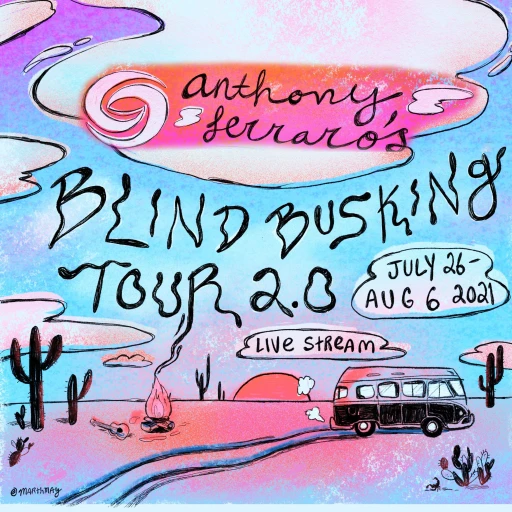
A blind musician and his fiancé attempt to drive insane amount of miles. Season 1 was from New Jersey to California and back.. Season 2 is from New Jersey to Denver and back. The catch? Anthony Ferraro sets up in beautiful places calling it his “Blind Busking Tour”. On the roadtrips in between stops a podcast is recorded from the ramblings on the road. What went well. What didn’t go so well? What they are looking forward to coming up next. These are the ramblings from the road during this trip. Season 1: November 2, 2020 – December 21, 2020. Season 2: July 26, 2021 – August 6, 2021 More info at https://www.asfvision.com
Categories: Music
Tags: America, anthony ferraro, asfvision, blind busking tour, blind musician, blindness, creator, instagram, lifestyle, livestream, marketing, music, music tour, relationships, roadtrip, roadtrips, tiktok, travel, Travel Planning, van life, video creator, youtube
Listen in as two sisters tackle various topics from adulthood, relationships, lifestyle tips, etc.—with a few tangents ofcourse~
Categories: Education, Society & Culture
Tags: adult, adulting, alittlesliceofparridise, chat, Comedy, family, Funny, growing up, growth, lifestyle, officially ceci, self help, Self-Improvement, thedownandnerdy, young adult, youtube
GAY RADIO SHOW: The Homo Happy Happy (formerly Outloud Orlando) is a talk & entertainment radio program hosted by Justice with an ever-changing cast of characters. It is a mix of real and light-hearted talk about real life, real people/events/news/utter stupidity and information for everyone with a focus on the GLBT community, both nationally and locally on FM radio in Central Florida since 2009 <><><><><><><><><><><><><><><><><><> Tune in every Tuesday at 4pm to hear new live episodes of Gay Radio Show .com out of Orlando, FL, streaming online at www.GayRadioShow.com or with the free TuneIn Radio app (search wprk) <><><><><><><><><><><><><><><><><><> Podcasts of the show are posted on facebook.com/GayRadioShow, iTunes, and PodOmatic.com, Stitcher and lots of other places. Follow us on TWITTER @GayRadioShow
Categories: Comedy
Tags: 1, challenge, shirley, whisper, whisperchallenge, youtube
The podcast for Independent Creators ( YouTubers, vloggers, podcasters, filmmakers, musicians, writers, speakers, or artists) looking to build their platform into a brand. We’ll learn from the folks who have already been in your shoes how to grow your youtube channel, how to monetize your podcast, how to find more speaking gigs, how to get your band on more radio stations, how to get your book or stories published, and how to grow your platform larger than you ever thought possible!
Categories: Business, Education
Tags: career, independentcreators, limelight, Platform, podcastforartists, podcastforfilmmakers, podcastforpodcasters, podcastforyoutubers, ryanmckay, speakers, vloggers, youtube, YouTubePodcast